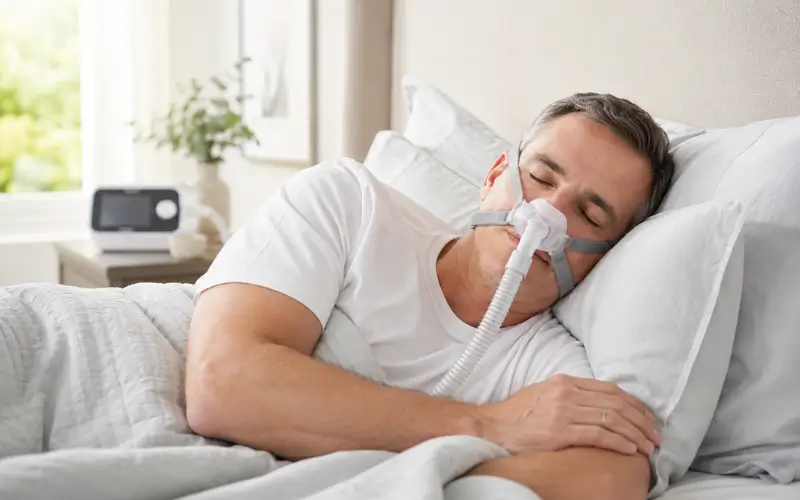
If you have just been prescribed CPAP therapy, or you are struggling with a mask that never quite feels right, you are not alone. The sleep apnea mask is the single most personal part of your entire CPAP setup. It sits on your face for hours every night, and if it does not fit well, therapy becomes uncomfortable fast, no matter how good the machine behind it is.
The right CPAP mask is not a matter of guesswork. It comes down to a handful of factors, including how you sleep, how you breathe, the shape of your face, the pressure your sleep study prescribed, and your own comfort preferences. Getting these right makes the difference between a mask you tolerate and one you barely notice once therapy becomes routine.
Table of Contents
Key Takeaways
- CPAP therapy relies on three parts working together, namely the machine, the mask, and the tubing that connects them.
- Sleep apnea masks fall into four main types, each suited to different needs. These are nasal masks, nasal pillow masks, full-face masks, and hybrid masks.
- The right mask for you depends on your face shape, sleeping position, breathing patterns, prescribed pressure, and skin sensitivity.
- Most mask problems, including leaks, marks, and dryness, have simple, practical fixes.
- A new mask deserves a genuine adjustment period before you decide it is the wrong fit. Most people need two to four weeks to settle in.
- Masks and their parts wear out over time and need regular replacement to keep working properly.
How CPAP Therapy Works
CPAP stands for continuous positive airway pressure, and the name describes exactly what the therapy does. It exists to treat sleep apnea, a condition where the muscles in your throat relax during sleep and allow soft tissue to collapse and block your airway. Each blockage interrupts your breathing until your body reacts and reopens the airway, and this cycle repeats throughout the night, disrupting the deep sleep your body needs.
CPAP therapy treats this directly. A steady stream of pressurised air is delivered through your airway while you sleep, and this pressure holds your throat open so it cannot collapse. With the airway kept open, breathing stays uninterrupted and normal sleep can continue. Three components make this happen, and each one plays a distinct role in your comfort and results.
CPAP Machines
CPAP machines are the unit that generates and regulates the airflow. They draw in room air, filter it, and push it out at the pressure your sleep study determined you need. Most modern machines also include a humidifier, either built directly into the unit or attached as an add-on chamber, which adds moisture to the air before it reaches you and helps prevent a dry mouth, sore throat, or irritated sinuses.
Machines also let you set the pressure itself, and many newer models use auto-adjusting technology that changes the pressure slightly throughout the night based on your breathing.
CPAP Masks
Sleep apnea masks are the interface between the machine and you, delivering pressurised air from the tubing into your airway so it can reach your throat and keep it open through the night. Masks connect to the tubing on one side and rest against the face on the other, held in place with headgear straps that keep the seal secure while you sleep.
Tubing and Other Accessories
CPAP tubing carries air from the machine to the mask, and it comes in a few varieties. Standard tubing is lightweight and affordable, while heated tubing warms the air as it travels, which helps prevent condensation build-up (sometimes called rainout) inside the tube. Some brands also offer different tubing lengths and diameters, useful if your bed setup needs extra reach or if you prefer a slimmer, lighter tube.
Filters sit inside the machine and need regular replacing to keep the air you breathe clean. The water chamber, which holds the humidifier’s water supply, is another part that needs regular refilling and cleaning to keep working properly. Headgear, the straps that hold your mask in place, is technically part of the mask but often sold and replaced separately.
If you travel, portable battery packs and travel-sized machines are worth considering to keep your therapy consistent away from home.
Types of Sleep Apnea Masks
Sleep apnea masks generally fall into four categories, each suited to different needs and sleeping habits. The differences between them are the first thing worth understanding before you choose one that works for you.
Nasal Masks
A nasal mask covers your nose only, from the bridge down to just above your upper lip, and forms a seal around that area. Air is delivered through your nostrils.
Advantages and Drawbacks
Nasal masks are the most commonly prescribed type, largely because they strike a good balance between coverage and comfort. They give a natural airflow route that closely matches how most people breathe, they are compact enough not to feel overwhelming, and they generally allow a good field of vision if you like to read or watch something before falling asleep.
The main drawback appears if you breathe through your mouth during sleep, since a nasal mask only delivers air through your nose. If your mouth opens involuntarily overnight, you will lose pressure through mouth leaks, which reduces how effective the therapy is and can leave you waking up with a dry mouth. Nasal masks also press against the bridge of the nose, which some people find uncomfortable over time, particularly at higher pressure settings.
Nasal Pillow Masks
Nasal pillow masks are the smallest and least invasive mask type. Instead of covering the nose, small silicone inserts sit directly at the entrance of each nostril and deliver air straight in.
Advantages and Drawbacks
The minimal design means less material on your face, which suits people who feel claustrophobic in a bulkier mask or who move around a lot during the night. Since there is no cushion resting on the bridge of the nose, nasal pillows work well for people who find that pressure point uncomfortable, and the small profile leaves plenty of room for glasses or reading in bed.
The trade-off is that all the airflow goes directly into a small area of your nostrils, which can feel forceful at higher pressure settings and may cause nasal dryness or irritation for some users. Like standard nasal masks, nasal pillows only work if you breathe through your nose, so mouth breathers tend to experience the same leak issues.
Full-Face (Oronasal) Masks
A full-face mask, sometimes called an oronasal mask, covers both your nose and your mouth, forming one larger seal around both.
Advantages and Drawbacks
Full-face masks are the go-to option for people who breathe through their mouth during sleep, since the mask delivers air regardless of which airway is open. They also tend to be the more comfortable choice at higher prescribed pressures, since the airflow is spread across a larger surface area rather than concentrated at the nose. This makes the seal more stable and less prone to the kind of forceful sensation nasal pillows can produce at higher settings. Full-face masks also work well for people with nasal congestion, allergies, or sinus issues, since they do not rely solely on clear nasal passages.
The larger coverage area is also the main drawback. Full-face masks have more surface contact with your skin, which increases the chance of red marks or irritation, and the bulkier design can feel confining for people prone to claustrophobia. They can also make it harder to wear glasses or read in bed, since the mask sits higher on the face.
Hybrid Masks
Hybrid masks combine elements of the other types, typically using nasal pillows at the nose paired with an under-the-nose or over-the-mouth cushion, aiming to deliver a lower-profile alternative to a full-face mask while still covering mouth breathing.
Advantages and Drawbacks
Hybrid masks can suit people who need mouth coverage but find standard full-face masks too bulky or claustrophobic. The reduced material can also mean less contact with the bridge of the nose, which some people find more comfortable than a traditional full-face design.
Hybrid masks are less widely available than the other three types, and because they are a newer design, the range of sizes and styles tends to be more limited. The correct fit can take extra trial and error to find, and replacement parts may also be harder to source compared with the more established mask categories.
Key Factors to Consider Before Choosing Your Sleep Apnea Mask
Once you understand the sleep apnea mask types available, the next step is matching one to your specific situation. A handful of factors make the biggest difference in comfort and effectiveness, and working through them before you buy will save a lot of trial and error later.
Face Shape and Sizing
Every mask brand sizes its cushions slightly differently, so a small in one brand is not always identical to a small in another. The right size matters a great deal, since a cushion that is too large will leak and one that is too small will press uncomfortably into your skin.
| Face Feature | What to Look For |
| Narrow face or nose | Smaller cushion sizes, nasal pillow masks often fit well |
| Wider face or nose | Full-face or nasal masks with a wider cushion range |
| Flat nasal bridge | Masks with a lower profile cushion to reduce pressure points |
| Prominent nasal bridge | Masks with contoured cushions that curve away from the bridge |
| Smaller facial structure | Petite or extra-small sizing lines, common in nasal pillow ranges |
Most manufacturers provide sizing guides or fitting templates you can hold against your face before buying. If you are unsure, a professional fitting through your sleep clinic or supplier is worth the time, since getting this step right early on prevents a lot of frustration down the line.
Breathing Patterns and Nasal Health
How you breathe overnight, along with the general condition of your nasal passages, plays a bigger role in mask choice than most people realise at first.
| Breathing Pattern or Condition | Mask Types That Tend to Work Well |
| Breathe through the nose consistently | Nasal masks, nasal pillow masks |
| Breathe through the mouth, or mouth falls open at night | Full-face masks, hybrid masks |
| Chronic nasal congestion or allergies | Full-face masks (do not rely on clear nasal passages) |
| Sinus issues or frequent blockages | Full-face masks, or nasal masks paired with a chin strap |
| Experience frequent mouth leaks with a nasal mask | Full-face masks, hybrid masks |
If you are not sure you are a mouth breather, a partner or family member sharing your bedroom is often a reliable source of information, since this pattern usually only becomes obvious to someone observing you asleep.
Sleeping Position
The position you sleep in affects how well a mask stays sealed through the night, since certain positions push the mask against a pillow or shift it out of place easily.
| Sleeping Position | Recommended Sleep Apnea Mask Type |
| Back sleeper | Most mask types work well, including full-face masks |
| Side sleeper | Nasal pillow masks or low-profile nasal masks, to avoid the mask pressing into the pillow |
| Stomach sleeper | Nasal pillow masks, since they sit closest to the face with the least bulk |
| Frequent position changes through the night | Nasal pillow masks or masks with flexible, swivelling tubing connectors |
Side sleepers in particular tend to struggle with bulkier masks, since the cushion or frame can get pushed against the pillow and break the seal. If you already know you move around a lot, this is one of the more important factors to weigh before buying.
Claustrophobia and Mask Coverage
If you feel uneasy with anything covering your face, mask coverage is worth thinking through carefully before you commit to a type. Nasal pillow masks offer the least material and the most open feel, since nothing sits over the bridge of the nose or mouth. Nasal masks sit in the middle, covering more of the face than pillows but still leaving the mouth and much of your field of vision free. Full-face and hybrid masks offer the most coverage, and while modern designs have become considerably less bulky over the years, they still involve more material against your skin than the other options.
If you suspect claustrophobia might be an issue, starting with a smaller, less invasive mask and moving up in coverage only if you need to (for example, if you turn out to be a mouth breather) is often a more comfortable way to approach the decision than starting with a full-face mask by default.
Facial Hair and Seal Quality
A beard or moustache can interfere with how well a mask cushion seals against your skin, since hair prevents silicone from making full contact with the surface underneath. This does not mean CPAP therapy is off the table if you have facial hair, but it does mean fit becomes more important, and a bit of extra trial and error may be needed.
Nasal pillow masks tend to work well for bearded users, since the seal happens inside the nostril rather than against the surrounding skin. If a nasal or full-face mask is a better fit for other reasons, some people find trimming the beard slightly along the seal line helps, or applying a small amount of mask sealant designed for this purpose. It is worth testing a mask over a few nights before assuming it will not work, since seal quality often varies noticeably between individuals.
Pressure Settings Prescribed by Your Sleep Study
Your sleep study determines the exact air pressure your body needs to keep your airway open overnight, and this is not something you should adjust yourself. That said, the pressure you have been prescribed does influence which sleep apnea mask type tends to feel most comfortable.
| Pressure Range | What to Expect | Sleep Apnea Mask Types That Tend to Work Well |
| Low (roughly 4-10 cmH2O) | Gentle airflow, few sealing issues | Nasal masks, nasal pillow masks |
| Medium (roughly 10-15 cmH2O) | Mouth leaks become more noticeable, particularly for back sleepers | Nasal masks, nasal pillow masks (worth watching for leaks) |
| High (roughly 15-20+ cmH2O) | Stronger airflow, seal stability becomes more important | Full-face masks |
At higher pressures, full-face masks tend to hold their seal more reliably because the airflow is distributed across a larger surface area, rather than concentrated at the nostrils. If you have a high pressure prescription and want to stick with a nasal mask or nasal pillows, pay close attention to seal quality and be prepared to switch if leaks or discomfort become a persistent issue.
Skin Sensitivity and Material Choice
Mask cushions are typically made from silicone, though some brands offer cloth or gel alternatives designed for sensitive skin. If you have reacted to silicone in the past, or you notice irritation, redness, or breakouts along the seal line after a few nights of use, it is worth trying an alternative material rather than assuming discomfort is simply part of the process.
A few practical points worth keeping in mind:
- Silicone cushions are the most common and generally hold up well over time, but they can cause irritation for people with particularly sensitive skin.
- Cloth-covered masks and gel cushions distribute pressure more evenly and can reduce friction marks, though they may need replacing more often.
- Mask liners, thin fabric covers that sit between your skin and the cushion, are a low-cost way to reduce irritation without switching mask types entirely.
Keeping the cushion clean matters as much as the material itself, since oil and skin product build-up can worsen irritation regardless of what the mask is made from.
What to Look For in Sleep Apnea Mask Quality and Build
Beyond fit and mask type, a handful of build qualities affect how well a sleep apnea mask performs day to day and how long it lasts.
| Feature | What to Look For |
| Design | A cushion and frame that distribute pressure evenly rather than concentrating it at one point |
| Adjustability | Straps and cushion positioning that can be fine-tuned without tools |
| Material | Medical-grade silicone or hypoallergenic alternatives for sensitive skin |
| Quality | Consistent seal performance over repeated use, including well after the first few nights |
| Cost | A balance between upfront price and expected lifespan, since cheaper masks often need replacing sooner |
| Maintenance | Parts that are easy to disassemble and clean without specialist tools |
Other Considerations
A few additional factors are worth thinking through, even though they do not always fit neatly into the categories above.
- Noise sensitivity: some masks are quieter than others, largely due to how their exhalation ports are designed. If you or a partner are light sleepers, this is worth asking about before buying.
- Wearing glasses, or reading and watching television before bed: masks that sit lower on the face, such as nasal pillows or nasal masks, generally leave more room for glasses and a clearer field of vision than full-face designs.
- Magnetic clips: some masks use magnetic headgear clips for quicker removal, though these are unsuitable for anyone with a pacemaker or certain other medical devices, so check compatibility if this applies to you.
Common Mask Problems and How to Solve Them
Even with the right CPAP mask, small issues can crop up once you start using it regularly. Most of these have simple, practical fixes, so a problem in the first few weeks does not necessarily mean you have the wrong mask.
Air Leaks
Air leaks happen when the cushion loses its seal against your skin, often around the nose bridge or cheeks, and you may hear a hissing sound or feel a draft of air escaping. Check that the cushion is seated evenly against your skin before tightening any straps, since leaks often come down to positioning rather than fit. Adjust strap tension gradually rather than overtightening in one go, since a tighter seal is not always a better seal. Replace cushions once they start to feel stiff or worn, as ageing silicone loses its ability to conform to your skin. Reposition the mask fully rather than just tugging at the leaking section, since a partial adjustment can create a new leak elsewhere.
Red Marks or Skin Irritation
Red marks or irritated skin usually appear along the edges of the cushion where it presses against your face, and they are often a sign the mask is sitting too tight or has been worn in the same position for too long. Loosen the headgear slightly and see if marks improve within a few nights, since over-tightening is one of the most common causes. A sleep apnea mask liner can add a layer of protection between your skin and the cushion without changing the fit. A rotation of pressure points, for example a different mask type used periodically, can also help if one area of your face takes the brunt of contact each night. Clean the cushion regularly, since built-up oil and skin residue can make friction and irritation worse over time.
Mask Noise
A whistling, hissing, or rattling sound from the mask is usually a sign of a small air leak or a worn exhalation valve, rather than a fault with the mask itself. Check the cushion seal first, since this is the most common cause. If the noise continues, inspect the exhalation port for damage or blockage, and replace the valve or cushion if it looks worn.
Dry Mouth or Nose
If you wake up with a dry mouth, check for mouth leaks during the night, since air escaping through an open mouth carries moisture away with it. A chin strap can help keep your mouth closed if you use a nasal mask, or switching to a full-face mask may resolve the issue more reliably if leaks persist. An upward adjustment to your humidifier setting can also make a noticeable difference, and heated tubing helps prevent the air from cooling and drying out before it reaches you.
Discomfort with Straps and Headgear
Straps that dig in, slip out of place, or feel uneven across the face are usually a sign of tension that is not evenly distributed, or headgear that has stretched out with use. Adjust tension evenly across all straps rather than tightening just one side, since uneven tension is a common cause of discomfort and marks. Headgear stretches out over time, so if adjusting tension no longer helps, it may simply be time to replace it. If a particular headgear style consistently digs in or feels uncomfortable, a different style from the same or another brand is often worth the small cost.
How to Put on a CPAP Mask Correctly
Putting your sleep apnea mask on correctly each night makes a real difference to comfort and seal quality, and it only takes a few extra seconds once it becomes a habit.
- Wash your face beforehand to remove any oil or skin product residue, since this helps the cushion seal properly against clean skin.
- Loosen all headgear straps fully before putting the mask on, rather than trying to pull a tightened mask over your head.
- Hold the mask gently against your face and pull the headgear over your head, letting the straps rest naturally rather than pulling them tight immediately.
- Adjust the straps gradually, starting from the bottom or the point furthest from your eyes, tightening just enough to create a seal without overtightening.
- Check the fit by running a finger lightly around the edge of the cushion to feel for any air escaping.
- Turn your machine on and lie in your normal sleeping position, since the seal can shift slightly once you are lying down.
- Make any final small adjustments while the machine is running, since this is when leaks become most noticeable.
Avoid tightening the straps as far as they will go in an attempt to stop every leak, since this usually causes discomfort and marks without meaningfully improving the seal. A properly fitted mask should feel snug rather than tight.
Trial and Adjustment Period
The adjustment to CPAP therapy takes time, and very few people find their ideal setup on the first night. Your body needs to get used to the sensation of air pressure, the feel of a mask on your face, and the routine of wearing both through an entire night’s sleep. This period varies from person to person, and a rocky start does not necessarily mean the mask or the therapy is wrong for you. It usually means you are still in the process of settling in.
What to Expect in the First Few Weeks
Some initial discomfort is normal as you adjust to the sensation of wearing a sleep apnea mask and having air delivered under pressure. You may notice mild skin marks, occasional leaks, or a general sense of unfamiliarity that fades as you build a routine. Most people report feeling meaningfully more comfortable somewhere between two and four weeks in, though this varies from person to person.
Tips for Easier Adjustment
Wearing your mask for short periods while awake, such as while watching television, can help you get used to the sensation before relying on it through a full night’s sleep. Your machine’s ramp setting, which begins at a lower pressure and gradually increases, can make falling asleep with the mask on feel less abrupt. Short naps with the mask on during the day can also help build familiarity without the pressure of needing a full night’s rest to go well.
When to Persevere vs When to Switch Masks
Minor discomfort, mild marks, and the occasional leak in the first couple of weeks are a normal part of adjustment and generally worth persevering through, since these often resolve on their own as you settle in. Persistent leaks that do not improve with adjustment, ongoing skin breakdown, or a mask that consistently disrupts your sleep after a genuine adjustment period are signs it may be time to consider a different mask type or size, rather than continuing to push through. There is no single right answer here, and working with your CPAP supplier to reassess your fit is a normal and expected part of the process.
Cleaning and Maintaining Your Mask
A clean, well-maintained mask performs better and lasts longer, and the routine involved is simpler than most people expect.
Daily Cleaning Routine
Wipe down the cushion each morning with a damp cloth or a CPAP-specific wipe to remove oil and skin residue before it builds up. Allow the mask to air dry fully before storing it, since trapped moisture can encourage bacterial growth.
Weekly Deep Clean
Once a week, disassemble the mask according to the manufacturer’s instructions and wash each component in warm water with a mild, unscented soap. Rinse thoroughly, since any leftover soap residue can irritate your skin or degrade the silicone over time. Leave all parts to air dry completely before reassembling.
When to Replace Mask Parts
Different components wear out at different rates, and replacing them on schedule keeps your therapy working as intended.
- Mask cushion: typically needs replacing every one to three months, depending on use and how quickly the silicone starts to lose its shape.
- Headgear and chin strap: usually lasts around six months, though stretching or fraying is a sign it needs replacing sooner.
- Mask frame: generally lasts six to twelve months, though should be replaced earlier if cracks or discolouration appear.
- Tubing: typically needs replacing every three to six months, or sooner if you notice small holes or reduced flexibility.
The replacement timeframes above are worth following even before a part visibly wears out, since a mask can lose its seal quality well before the damage becomes obvious. A part left in place until it visibly fails often means leaks or discomfort go on for longer than they need to.
Find Your Perfect Mask at CPAP Essentials
Most people do not land on the right mask by chance. It usually takes a few adjustments, a bit of patience, and someone who can point out what to look for, and that is exactly what our team at CPAP Essentials offers.
We have helped many CPAP users work through exactly the factors covered in this guide, from face shape and sleeping position to prescribed pressure and skin sensitivity, and we can talk you through which options tend to suit your specific situation. If you are unsure where to start, or you have tried a mask that is not working out, get in touch and we will help you find a better fit. You can also browse our full mask range online to see the sizes, styles, and accessories we currently stock.
Frequently Asked Questions
How do you choose a mask if you can’t try it on first?
Look closely at sizing guides provided by the manufacturer, and consider your known sleeping position, breathing pattern, and any prescribed pressure before deciding. Many suppliers, including CPAP Essentials, offer guidance to help match you to a suitable mask even without an in-person trial.
What’s the difference between a nasal mask and a nasal pillow mask?
A nasal mask covers the entire nose from the bridge to above the lip, while a nasal pillow mask uses small inserts that sit directly at the nostril entrance, offering a smaller, more minimal profile.
Can I use any mask with any CPAP machine?
Most masks are compatible with most machines, since they connect through a standard tubing port. It is still worth checking compatibility with your specific machine model before buying, particularly with speciality or older equipment.
How tight should a CPAP mask be?
A mask should feel snug enough to prevent leaks without pressing uncomfortably into your skin. If you can see red marks forming quickly or feel constant pressure, the straps are likely too tight.
How do I know if my CPAP mask doesn’t fit properly?
Common signs include persistent air leaks, red marks or irritation along the seal line, discomfort that does not improve after a few weeks, and difficulty maintaining consistent therapy pressure.
What is the best CPAP mask for side sleepers?
Nasal pillow masks or low-profile nasal masks tend to work best for side sleepers, since their smaller size is less likely to be disrupted by a pillow.
Can I sleep on my side with a CPAP mask on?
Yes, though the mask type matters. Bulkier masks are more prone to shifting or leaking when pressed against a pillow, so a smaller profile mask generally makes side sleeping more comfortable.
What’s the best CPAP mask for mouth breathers?
Full-face masks are generally the better option for mouth breathers, since they cover both the nose and mouth and deliver air regardless of which airway is open.
What CPAP mask is best for a deviated septum?
Full-face masks are often recommended, since they do not rely solely on clear nasal airflow. A conversation with your sleep specialist about your specific nasal condition is worth having before you choose a mask type.
Do CPAP masks work for people with beards?
Yes, though seal quality can be affected by facial hair. Nasal pillow masks tend to work well, since the seal happens inside the nostril rather than against the surrounding skin.
Can I wear glasses with a CPAP mask on?
Nasal pillow masks and nasal masks generally leave enough room for glasses, since they sit lower on the face than full-face designs.
Is it normal for a new CPAP mask to feel uncomfortable at first?
Yes, some initial discomfort is a normal part of adjusting to CPAP therapy, and it generally improves as you settle into a routine over the following weeks.
How long does it take to get used to wearing a CPAP mask?
Most people report feeling noticeably more comfortable within two to four weeks, though this varies depending on the individual and the mask type.
Can I switch mask types after starting CPAP therapy?
Yes, and it is common for people to try a couple of different mask types before settling on the one that works best for their needs.
What should I do if my mask keeps leaking air?
Check that the cushion is seated evenly, adjust strap tension gradually rather than overtightening, and replace the cushion if it has become worn or stiff.
Why does my sleep apnea mask make a whistling noise?
Whistling is usually caused by a small air leak or a worn exhalation valve. A check of the seal and the exhalation valve for damage generally resolves the issue.
Can I use a CPAP mask if I have a cold or blocked nose?
Yes, though a full-face mask may be more comfortable during periods of congestion, since it does not rely solely on clear nasal airflow.
Can children use CPAP masks?
Yes, paediatric-specific masks are available in smaller sizes designed to fit a child’s face safely and comfortably.
How often should I replace my CPAP mask?
Cushions typically need replacing every one to three months, while the full mask frame generally lasts between six and twelve months, depending on use and wear.
How do I clean my CPAP mask if I don’t have access to CPAP wipes?
Warm water and a small amount of mild, unscented soap work well as an alternative. Rinse thoroughly and allow all parts to air dry fully before reassembling.
Can I travel with my CPAP mask?
Yes, most masks are compact enough to travel with easily. A protective case for your mask helps prevent damage to the cushion or frame during transit.